Category: Society

  • Charity provides stability for homeless young people in unsettling times

    Hull Resettlement Project is doubling down to provide much needed stability for some of the city’s single homeless people during this unsettling lockdown.

    The charity provides short term accommodation for single homeless people, at four sites across the city. They work with young people and with older adults. All people in the project’s hostels are helped to develop life skills, improve their education, and are encouraged to aspire.

    The coronavirus lockdown has presented many new challenges too.

    Steve Wilson is Deputy General Manager at the charity. He works mostly with the charity’s younger residents.

    Steve said: “We had a house meeting at the very beginning of this, sat down with the kids, and told them that life is going to be changing for them. Some were a bit shocked. Some thought it was going to be like the Big Brother house. I think it’s the moving around, and leaving the hostel that has really hit them.”

    “At the beginning they coped really well,” said Steve. “It’s our daily job to reassure and guide them, and to help them, advise them, and comfort them, and support them. Everything is heightened and more exaggerated now.”

    The young people in the hostels have generally responded positively to lockdown measures. Some have stepped up to the mark, taking control and showing leadership as new challenges present themselves. Others have taken charge of the kitchen, cooking not just for themselves but for all residents of their hostel.

    “They’ve been cooking tea twice a week,” said Steve. “They’re helping with the cleaning. They just want to be involved. What we’re finding is they’re buddying-up to help each other. I’m immensely proud of them for how they’re responding and how they’ve reacted.”

    There has been a swell of voluntary activity seen across the city, as many people have responded to help those less fortunate or in more urgent need during the coronavirus pandemic.

    The Resettlement Project too has been receiving much welcomed additional support.

    Steve said: “It’s opened us up to the outside world. Wonderful organisations have been providing us food, and Easter eggs. If you’re a young person in lockdown, and you’re getting Easter eggs and food you wouldn’t normally get, it brightens up your day and breaks up the monotony.

    “Weirdly enough, lockdown has put us in touch with many organisations we wouldn’t normally be in touch with.”

    The charity is encouraged by the additional contacts it is making, and aims to strengthen these external relationships in the future.

    Like many other projects providing accommodation and support to people in need, Hull Resettlement Project has found it difficult to get some items that would make life safer for residents and staff.

    “The council asked us what we needed quite early on, and we asked for the obvious things like masks and other personal protective equipment (PPE), because social distancing is difficult in a house with 13 kids, but never did get that support.

    “We’ve been pretty lucky though. We’ve been adopted by a surgeon. His wife and friends bring us food, home-cooked curry. And a friend of theirs also brings us pizza and chips. And they provided us with our PPE. We’ve been very grateful for their support,” said Steve.

    The lockdown, and uncertainty about how long it is going to last, are having dramatic impacts upon the economy of the city. Some businesses have already closed for good, others will be unable or unwilling to invest in new employees after the pandemic has ended.

    It’s a particularly difficult time for young people that may be exploring employment, or further education and training.

    “It’s going to be tough. I think we have to get people into the mindset that they won’t be moving on as quickly as they might have done. We don’t know about the colleges and how they’ll be sustaining themselves. We don’t know about the businesses where our residents have been doing work placements. We just don’t know what the landscape is going to look like.

    “As an organisation it’ll draw on all the skills of our staff to paint a picture of hope, to tell our residents that things will get better. And it will get better, but it’s going to take a long time. It’s going to be tough for us to keep morale up, but that’s what we do, and that’s what we do well,” said Steve.

    All households across the city are experiencing challenges that few could have planned for at the start of this year. It is a worrying time for all.

    “A parent, whether you’re a corporate parent or a real parent, you try and take on the worries of your children, and that’s what we’re doing,” said Steve.

    Jerome Whittingham
  • Gig Buddies embrace new opportunities to enjoy arts and develop friendships

    Gig Buddies Hull and East Riding, a project delivered by mencap, is finding new ways of developing buddies’ love for the arts locally, and developing deeper friendships within their group.

    The befriending project for young adults with learning disability launched last summer, and now has an active membership of buddies that enjoy meeting up for trips to music gigs, theatre shows, and more. The project is funded by the Co-op Foundation, and its aim is to reduce youth loneliness and isolation.

    The group has had a very busy first few months, enjoying lots of arts excursions together.

    Emily Clixby is the organiser of the Hull and East Riding Gig Buddies project.

    Emily said: “Hull Truck have been amazing, they’ve been really accommodating, and they offer pay-as-you-like tickets as well. Middle Child were great, we went to their panto, they gave us ten tickets to go to panto at Christmas. We’ve been to Trinity Fest too, and to gigs by local bands.”

    She explained how the closure of local venues and theatres came as a blow to the relatively new project, but the group was not deterred.

    She said: “Gig Buddies is part of a wider movement of similar projects across the UK, it started with a project in Brighton called Stay Up Late. They’ve set up a ‘coronavirus festival’, and they have live music every night between 8pm and 9pm, so buddies are watching those gigs online.”

    Not all buddies have access to the internet, though, and some struggle with the technology. Most of the buddies still live at home with their parents and carers, others live in residential homes, but some live independently. It’s those that live alone that are most at risk of being socially isolated, particularly at the moment.

    Emily said: “For those buddies that don’t have the internet we’re writing letters, we’re posting things off to them. I’m writing one at the moment and putting a little puzzle book in, I’m putting a CD in there too.

    “We’ve created a Gig Buddies play list as well. People have picked their top five songs, it’s nice knowing that someone else has chosen the music and that everyone is listening to it.

    “We’re trying to find different ways to engage people that don’t have the internet as well, really.”

    Many of the city’s performing artists are now embracing virtual opportunities to share their creative output. There has been a real, and welcome, explosion of streams appearing across social media each evening this week.

    Emily said: “I’m searching, at the moment, for things to share with my Gig Buddies, especially things that are Gig Buddy friendly. We’d really welcome artists getting in touch with us, inviting us to engage.

    “Gig Buddies is all about going out and accessing night-life and enjoying culture. Now this has happened, going out is impossible. We’re looking at different ways of continuing, but not doing it all online. I think people forget that not everyone has access to the internet, and some struggle.”

    If the city’s artists have ideas of how they can engage with this group, the Gig Buddies would love to hear from you.

    Jerome Whittingham

  • Street Book reveals junior designers’ thoughts on dyslexia, written large

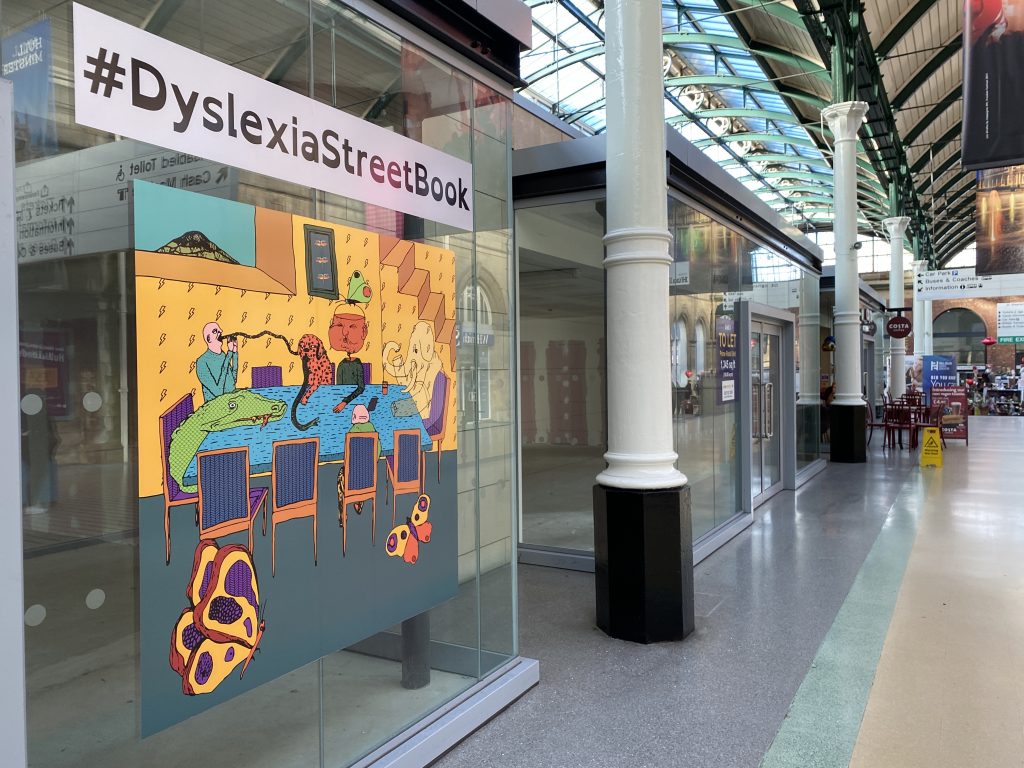
    A team of junior designers in Hull are sharing their thoughts about growing up with dyslexia in an innovative ‘street book’ presented in the city centre.

    The Dyslexia Street Book, Creative Briefs, Hull. Photo © Jerome Whittingham.

    The over-sized pages of the street book, illustrated by the young designers during a year-long project, are on display in several busy locations across Hull, including in the main transport interchange, at a city farm, and outside a popular dinosaur museum.

    Josh, 16 years old, said: “The clue’s in the name really. It’s just a massive book, with massive pages, that are just spread along the street. It’s about raising awareness of dyslexia, so for me it’s quite a special thing. A lot of people would say ‘oh dyslexia is purely about reading and writing, you can’t read, you can’t write’. Well, of course that’s not true. So we’re trying to put this in a way that people can learn about what dyslexia really is. There’s a lot to it.”

    Collectively calling themselves the ‘Junior Design Factory’, the creators of the street book are all children who attend workshops delivered by Creative Briefs.

    Creative Briefs is a community interest company directed by business partners Jason Bowers and Rebecca Shipham, both professional designers.  The company’s mission is to help children with special educational needs to flourish by giving them the opportunity to be creative in a professional design-studio setting.

    Jason only found out he’s dyslexic whilst studying for a teaching qualification in his mid 30s. Describing himself as ‘a happy kid’, he also explained how he sometimes struggled at school, finding it difficult to make sense of english and mathematics in particular. He would get frustrated, throwing books around the classroom rather than reading them. His parents were frustrated at his attitude to studying too, calling him lazy.

    Jason Bowers, Director Creative Briefs, Hull. Photo © Jerome Whittingham.

    Jason said: “I couldn’t understand why people enjoyed reading, I still can’t. It’s such an effort. I mean, I do read, I spend a lot of the day reading, but it’s either documents or things that I need for the project. I can’t read for pleasure, it takes too much concentration for it to sink in, unless it’s a topic I really like. Outside of that I’ll find any other way of getting information without having to sit down and read a book.”

    A surprising number of dyslexic people may share Jason’s feelings regarding reading.

    The British Dyslexia Association reports that ten per cent of the UK population may have the condition. That’s as many as three children in a typical classroom.

    Dyslexia affects not only people’s ability to read and write, but also their ability to process information they see and hear. They think differently.

    Jason and Rebecca at Creative Briefs are concerned that the talents of young people with dyslexia are being overlooked in mainstream education, and later under-developed in the workplace.

    Jason explained that being assessed and found to be dyslexic at 35 years old was a fresh start for him, helping him to understand how best to use his creative skills.

    He said: “That day was a massive relief for me. That explained why I’d been in set 3 for maths, and why I found english a struggle. People that educate others need to understand this earlier on. They need more knowledge. Rather than having a powerpoint about Special Educational Needs and Disabilities, they need 1 to 1 engagement with people in that field, or meeting someone with experience of it. It’s a massive area that’s untapped.”

    The taps of creativity in the Junior Design Factory are, however, in full flow. Younger children sit side-by-side with teenagers as equals during design workshops and pitches to visiting professionals and clients. Everyone has something useful and important to add to the design process on any given project.

    “That works because we’ve all got strengths and weaknesses. Just because you’re 8 or 9 or 10 years old doesn’t mean you’ve not got ways of looking at things, or knowledge, that some of the older people lack. It’s a good mix. We assume everyone can do things. It’s only when they start to pick things out that they find they can excel in that area,” said Jason.

    The junior designers have called on the support of several well-established professionals during the completion of their dyslexia street book project, giving them enviable experience of a range of creative careers.

    Visual artist Jonny Rowe helped to shape the children’s initial drawings into large-scale page illustrations. Poet Vicky Foster, winner of The Imison Award at this year’s BBC Audio Drama Awards, worked with the children to write and record poetry that accompanies each page of the book. Musicians Pat Dooner and Carl Conway-Davis of The Broken Orchestra invited the children into their recording studio to produce and record soundscapes to add further dimensions to the poetry.

    The Street Book is an enlightening display which uses illustration, and sound and poetry accessed by QR codes on the pages, to reveal insights into how dyslexic people think. They think differently. The message from these junior designers is written large.

    Creative Briefs:

    www.creativebriefs.co.uk

  • Come back to retail

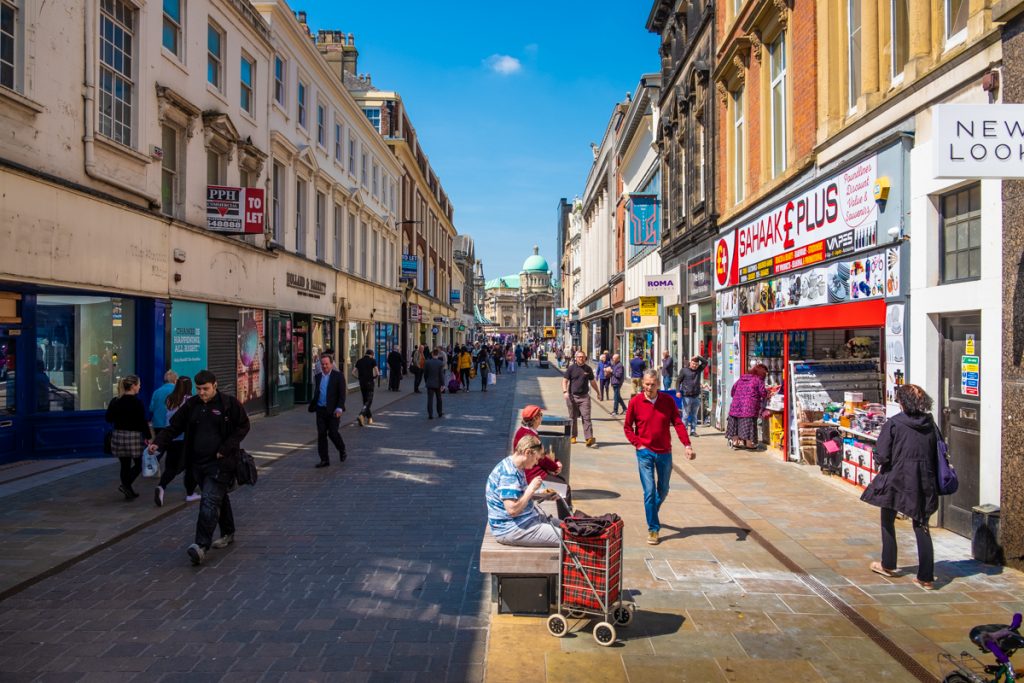
    I’ve been chatting to people, exploring what can be done to reinvigorate retail in Hull city centre.

    PODCAST: 30 minutes

    In this podcast we hear from shopkeepers – all confidently trying out new ventures, we dip into history for ideas, we tackle tax and the business rates conundrum, and you hear one of our local MPs talking very passionately about foliage.

    There are solutions to the decline of our High Streets.

  • Project Blyth offers children the thrills of the racetrack

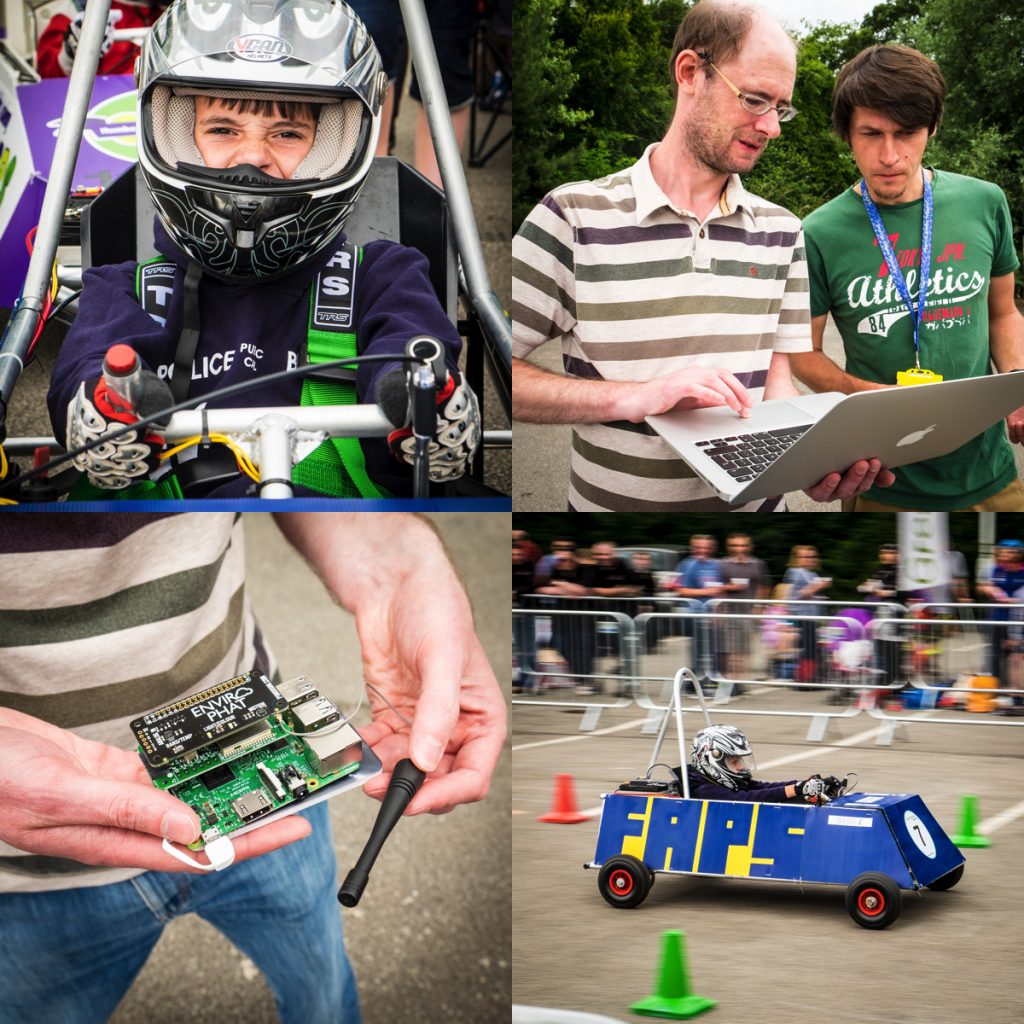
    Project Blyth, run by the Greenpower Education Trust, offers young people the thrills and spills of the racetrack, but only after they’ve successfully built their own single-seater IET Formula 24 kit cars.

    I’ve been been following the progress of Francis Askew Primary School’s car, competing in the IET Formula Goblin class for 9-11 year olds.

    PODCAST: 5 minutes

    With thanks to Connected Hull.

  • The Chewy Project

    Children at Dorchester Primary School in Hull tell me all about The Chewy Project, led by innovative design agency Creative Briefs.

    We’ve all had it stuck to our shoe at some point, but these children have been exploring what can be done with chewing gum before it litters the streets.

    PODCAST: 5 minutes

    An ace little project.

    Find out more about Creative Briefs here: https://www.creativebriefs.co.uk/

  • Emmaus Hull Launch Plans for ‘The Orchard’

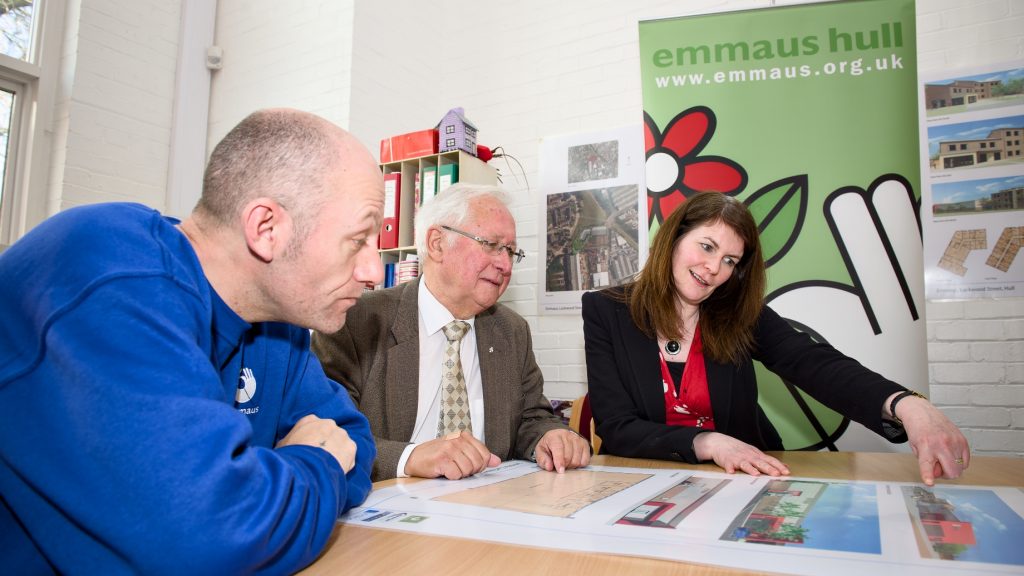
    Plans for ‘The Orchard’, an innovative centre and project for people caught in homelessness, have been revealed by Emmaus Hull.

    Plans for The Orchard, a new home for people experiencing homelessness in Hull, have been revealed by Emmaus. © Jerome Whittingham.

    The plans, now ready for submission to Hull City Council’s planning department for approval, are for a building on Lockwood Street. The Orchard will provide a home for up to 30 ‘companions’ and also employment in a furniture restoration enterprise. 

    To be built in partnership with Chevin Housing Association Ltd,  funding is being partly provided by the Homes and Communities Agency.  The target is to have the building finished and in operation by March 2015.

    Richard, who currently has a home in Emmaus Leeds, explains the benefits of this sort of project: “This is not like living in a traditional homelessness hostel, none of the residents need to ‘sign on’.  You don’t struggle to get a job interview because of your past, you’re not seen as a criminal or addict,  Emmaus give you a job.  That can turn your life around.  I really think Hull deserves an Emmaus project.”

    Submitting plans for this innovative project is another significant step in bringing an Emmaus project to Hull, a dream pursued by former council leader Patrick Doyle for more than 5 years.

    “Today is important.  We’ve been talking about this a long time.  Today we’re on the cusp of achievement” says Patrick.

    “This is not short-term, it’s about getting people turned around and on the way to self-sufficiency and independence.  People will be able to stay at the project as long as they like, because they will like it.  They will learn a range of skills within the enterprise like restoration and van driving.”

    In keeping with Hull’s drive to become a greener city, ‘The Orchard’ will also demonstrate its commitment to reducing its environmental impact.  The residency and workshops will be built to high environmental standards.  The project also hopes to plant a real orchard of fruit trees, and to become partly self-sufficient by growing food for the table from its own allotment.

    Emmaus has a fantastic reputation nationally for the work it does with formerly homeless people.  Offering its residents immediate work, and helping them to learn new skills, gives ‘companions’ hope and value.  This project is about more than giving someone a home, it’s about restoring lives.

    Jerome Whittingham

  • Gimme Shelter gig rocks Holy Trinity Hull

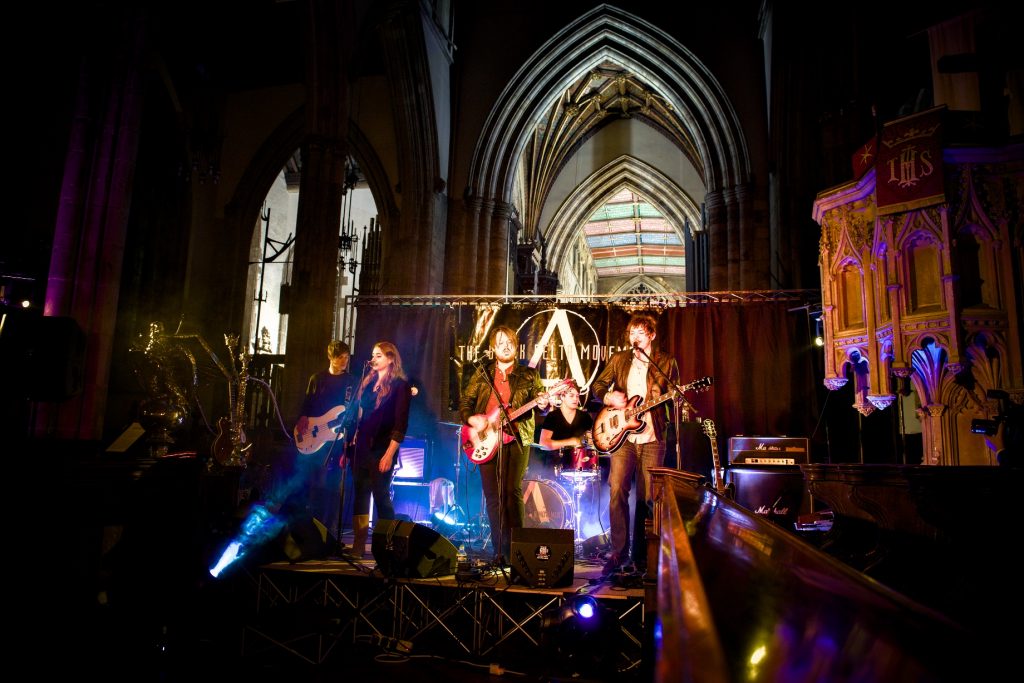
    The stained glass rattled, the medieval masonry trembled, and the pews of Hull’s Holy Trinity Church filled with 300 supporters for Gimme Shelter – a homelessness benefit.

    Gimme Shelter rocked Holy Trinity church, Hull. © Jerome Whittingham.

    The gig, the first rock concert of its kind to be hosted by the ancient venue, was the idea of The Black Delta Movement, Hull’s foremost psychedelic garage band.

    Matt Burr, guitarist and frontman for the band, revealed to me how the idea came about.

    “The band were traveling back from a gig last autumn, and we started chatting about how we might ‘give something back’ to the city and our followers. Some of the band have recently seen how homelessness affects families, so we hit on the idea of doing a homelessness benefit gig to raise awareness of the issue. We needed a venue, and thought we’d ask Holy Trinity, not knowing what the answer would be,” said Matt.

    Revd Neal Barnes, vicar of Holy Trinity, takes up the story: “We at Holy Trinity were delighted to offer the ancient and magnificent building at the heart of the city for this really important cause. We see many people who are sleeping rough and who have no secure place to call home. The stories of how these people end up on the street are heart-rending. We hope the concert will bring the issues more into the open and encourage more people to help those who are sleeping rough.”

    The evening was a great success, and delivered on its intentions to raise awareness about the issues around homelessness in the city, whilst entertaining visitors with some of the best indie music the region has to offer.

    The Black Delta Movement were joined by 3 other bands, The Hillbilly Troupe, The Happy Endings, and This Resistance.

    The gig was also a showcase for some of the city’s homelessness sector organisations, including Humber Region YMCA, Hull HARP (Homeless and Rootless Project), 1 in 4 (NHS mental health campaign), Restoration House Ministries, and Hull Street Angels.

    This is the second time in recent weeks that Hull, and the Humber region, has made a bold statement of concern for local homeless people. The Humber Region YMCA Sleep Easy event, held overnight on Friday 1st February, saw 200 people sleeping rough for one night, raising over £20,000 to support various local homelessness charities.

    The importance of events like Gimme Shelter and Sleep Easy cannot be overstated. Locally we’ve already seen rough sleeper numbers rise dramatically, and more families are falling into debt and poverty. Soon to be introduced ‘welfare reform’ measures will see even greater demand being put on local charities that work to support homeless people and those in poverty, especially young people at risk of homelessness.

    Gimme Shelter at Holy Trinity was both a bold display of social action and a fantastic exhibition of musical talent. Its impact will reverberate around the city for months to come.

    Jerome Whittingham